

A self-guided look
A full day in Cardinal, screen by screen
Real screens from a working property, in the order a day happens. Everything sits a click or two from where you are.
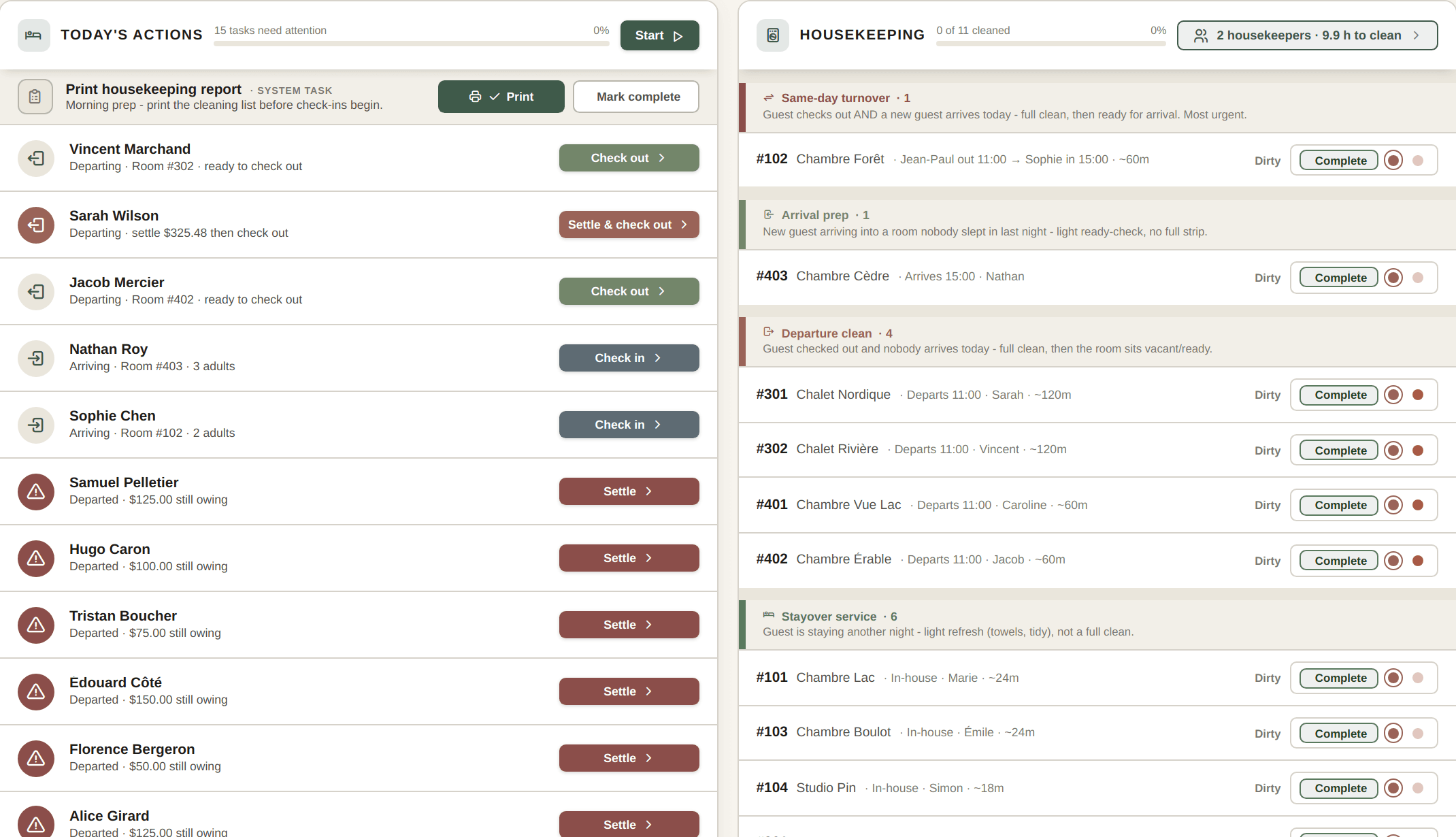
Open one screen and your day is ready
There is no assembling the morning. You open one screen and the day is on it, in the order it needs doing, and each line is one click from done.
How it works
Today's actions are listed for you, from what is happening at the property: arrivals to check in, departures to settle, balances to collect, rooms to turn over, activities to prepare. Clicking a task either completes it or opens the exact screen that does.
Every room, cabin and site on one board
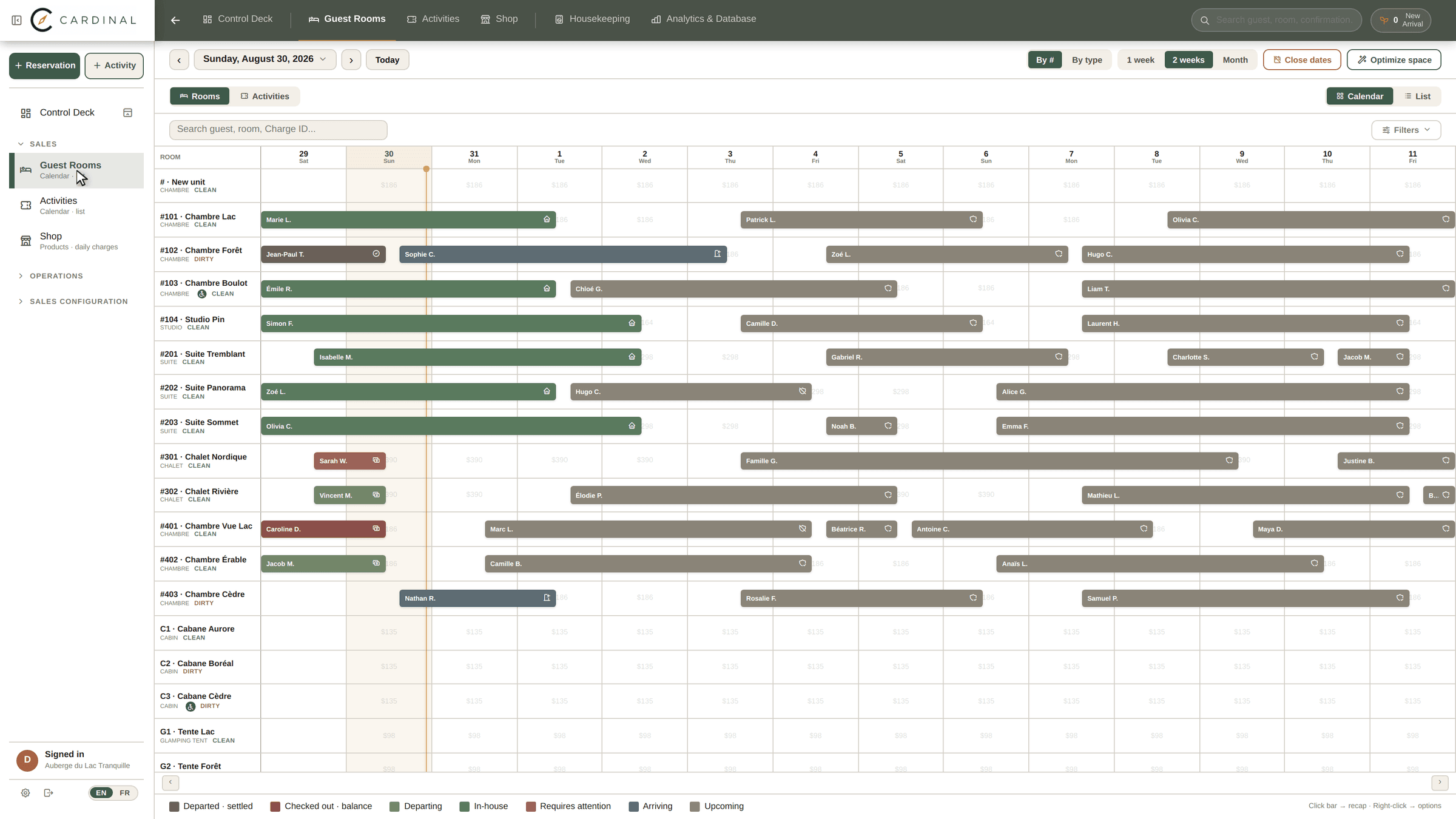
Somebody calls wanting three nights next weekend. You can see the answer without opening anything else.
How it works
Rooms against dates, colour-coded by stay state, with the per-night rate on each. Filter by division so a lodge wing and a campground sit side by side without becoming two systems. Auto-assign picks the least-used available room in the category, so wear spreads across the property instead of concentrating on the ones nearest the office.
Book an activity and it lands on the guest's bill
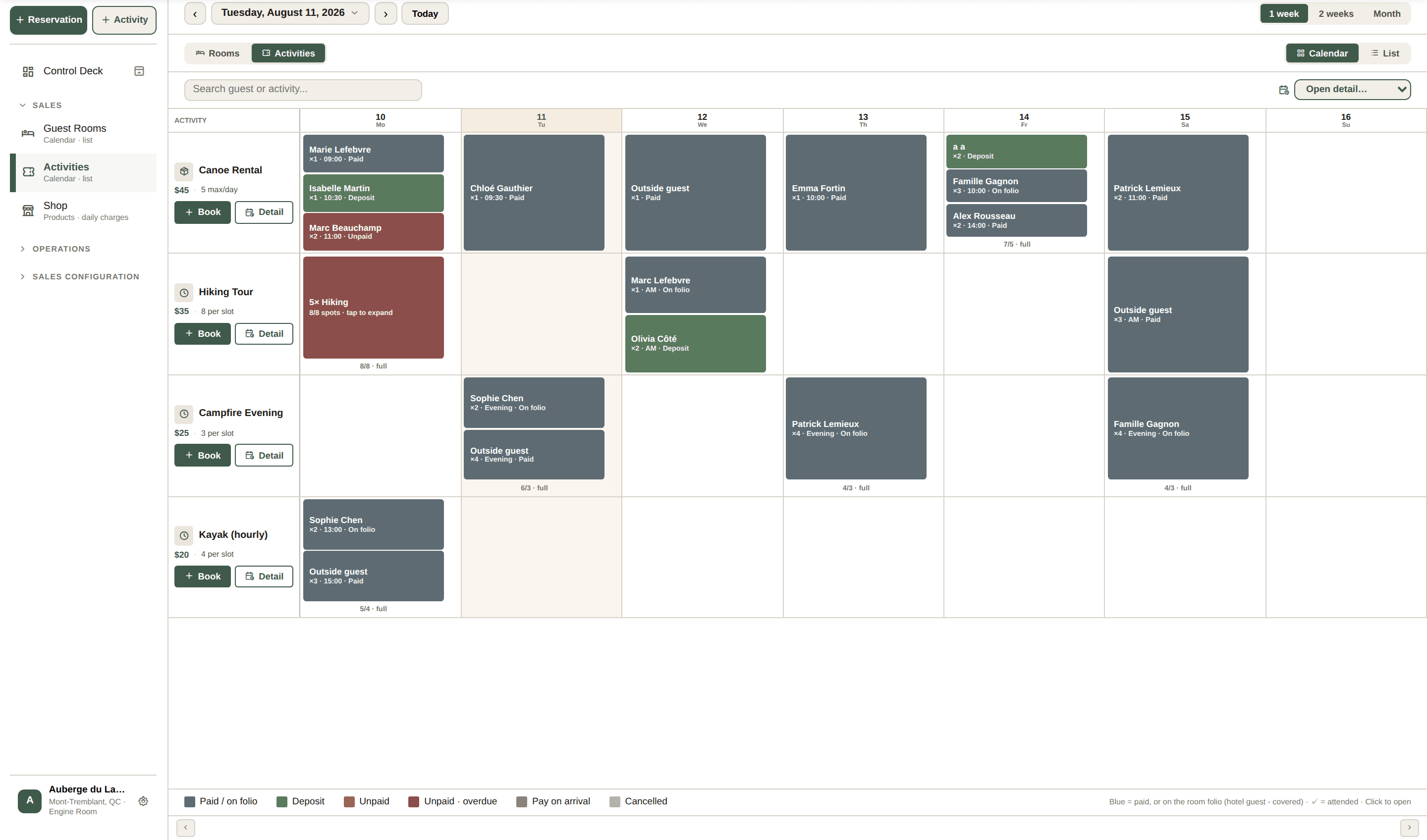
A guest adds a guided paddle at the desk. It goes on their folio, not on a clipboard, and the capacity for two o'clock updates itself.
How it works
Three scheduling models: inventory for equipment you own a fixed number of, time slots for a session at a set hour, hourly for something rented by the hour. Each sets its own capacity cap and pricing formula. Someone who is not staying with you can book and pay for an activity on their own folio.
Sell any extra, and settle it all at checkout
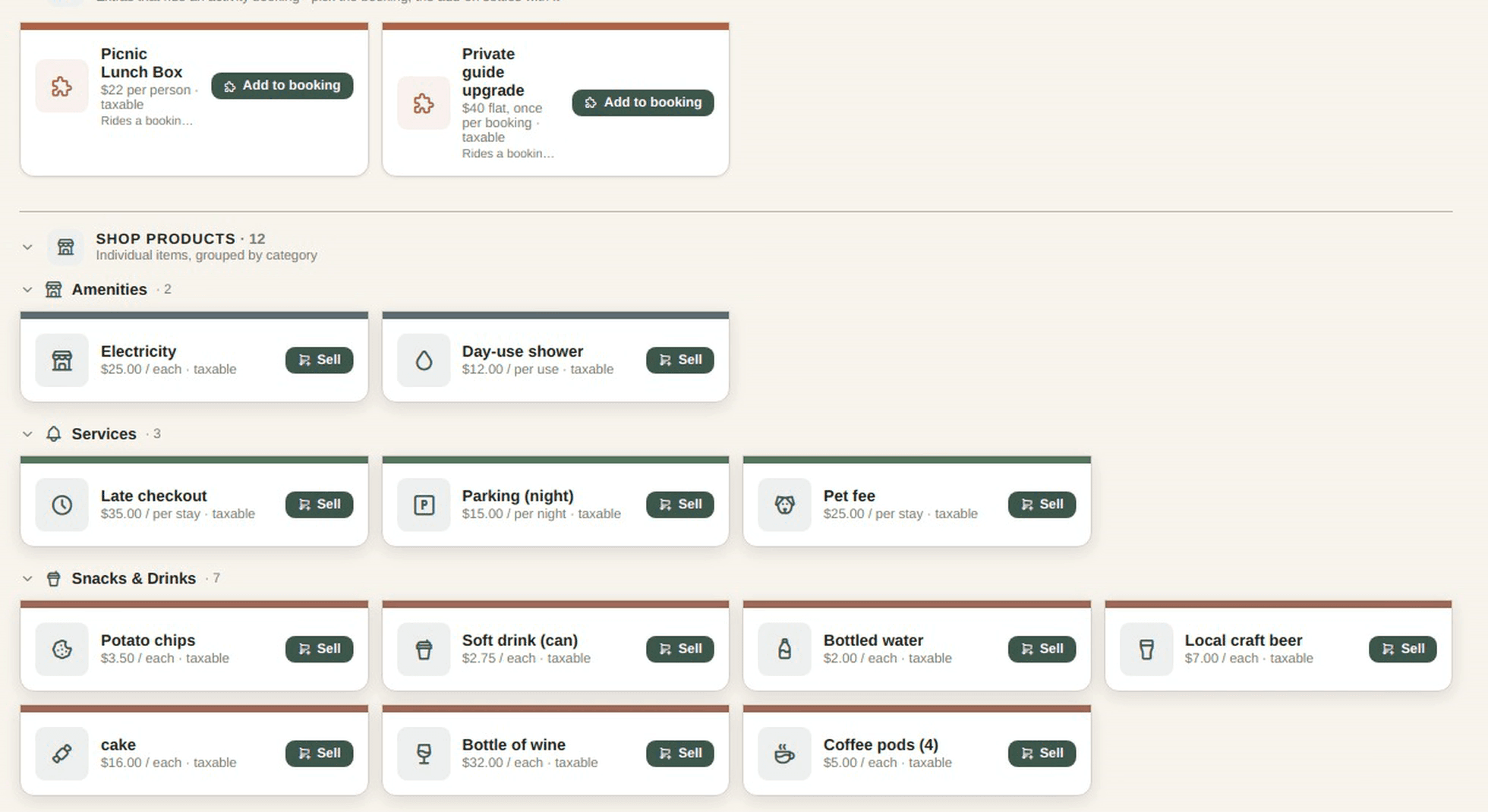
Rung up against the room, or against a house account, and settled once when they leave. Nobody is keeping a tab on paper.
How it works
Products and packages with taxable flags, priced per stay, per night, per person or per person-night. Charges post to the guest's folio as they happen, so the balance on screen is the balance, all day.
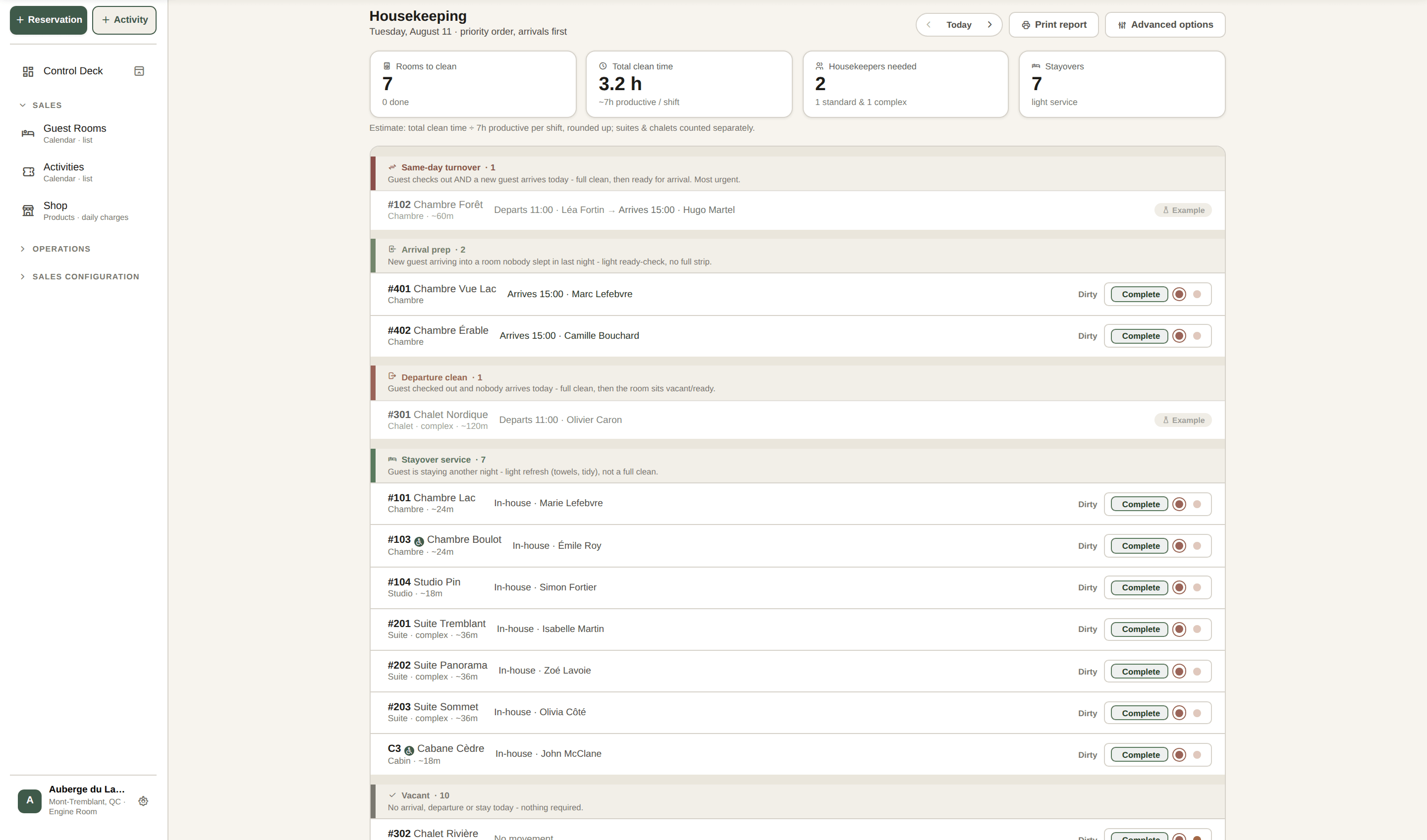
How many people do you need tomorrow?
The answer in people, worked out from your own cleaning times.
How it works
Tomorrow's movements convert into rooms to clean, total cleaning time and housekeepers needed, with a seven day outlook. Priority is derived from the movements themselves, so a same-day turnover outranks a stayover without anyone maintaining the order. Cleaning time is set per accommodation type, so a studio and a four bedroom chalet are not averaged together.
Go home. Your books are already done.
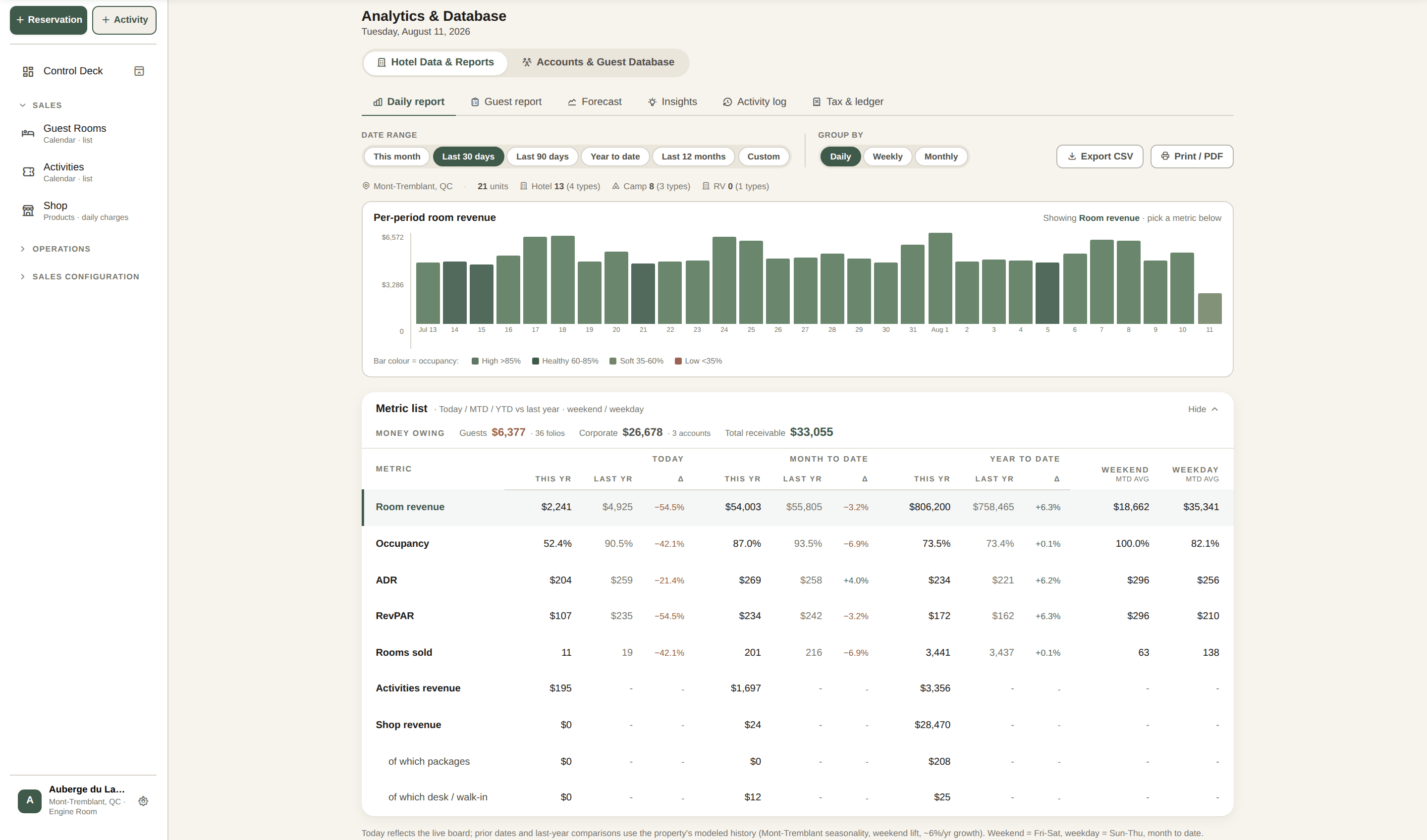
No batch, no nightly close, no report to remember. Every transaction posted when it happened, so the books were correct all day and they still are.
How it works
Nothing posted can be edited afterwards, only reversed, and each tax is kept separately, so the remittance report reads straight from the books. An overnight sweep resolves no-shows and overdue check-outs on its own. There is no night audit because there is nothing left to roll.
That is the whole day, on a property with rooms, chalets, cabins, glamping tents, campsites and a canoe rental. Two things a screenshot can't show: all six screens are one page load, so moving between them is instant, and the small (i) beside an unfamiliar field explains it right there, in plain language.
The books, housekeeping, the booking page and the company accounts are one system, which is why the day arrives as work to do. How it is built counts the difference on three everyday jobs.
Getting here from what you run now: we bring your reservations across with you on a call, included in the price, and you can export everything yourself whenever you want.
When you want the real thing
See it on your own property, with your own rates.
Thirty minutes on your own rooms and rates, with your questions answered as we go.