

For B&Bs and small inns
The breakfast is in the name, so the software should handle it
Five rooms, one all-in price, and somebody has to know by 7am how many people are eating and which of them cannot have gluten. That is a rate problem, a tax problem and a kitchen problem, and most systems solve none of the three.
The all-in rate
One price to the guest, correct tax underneath
Blending breakfast into the nightly rate is the thing a B&B does that breaks generic property software.
Three ways to include it, chosen per item
Charge breakfast as its own line, blend it into the nightly price so the guest sees one all-in rate, or comp it. The choice is per item rather than a setting you live with.
Blended, and still carved for tax
When the price is blended, the lodging tax is still computed on the lodging portion only, never on the breakfast. This is where systems that model tax as a percentage attached to a product go wrong, and it is wrong in a direction you only find at audit.
Per person-night, billed without arithmetic
Breakfast for two over three nights bills six. Choose which day a package starts and one added on day two of a four night stay bills two mornings, not four.
A rate always lands on the lower price
An automatically applied rate lands at or below the rate the guest would otherwise have paid. The cheapest qualifying plan wins, the base rate is always in the running, and a seasonal surcharge is offered as a choice rather than applied quietly.
The guest sees one number. The ledger sees a room, a breakfast, and the right tax on each.
The 7am problem
One sheet that answers who is eating
The guest service report is the kitchen sheet
Every guest on property that day, their daily services, their whole-stay items, that day's activities with times, and a signature column. It prints. It is the rooming list and the kitchen sheet in one document rather than two that disagree.
A returning guest is a record, not a memory
The guest database keeps folio history per guest, so the third visit opens with what the first two actually were rather than with what somebody remembers about them.
The day arrives as a list
Arrivals, departures, balances to collect and rooms to turn over, generated from live state. For a property where the owner is also the cook and the front desk, the value is not the feature count, it is not having to assemble the day yourself over coffee.
Optional sections stay out of the way
A five room property does not pay in complexity for features built for a hundred. Optional sections stay collapsed and labelled optional until you go looking for them.
If you also rent a cottage on the property, run a table d'hote, or sell a guided outing, those are not a second system here. Accommodation types are arbitrary, activities are first-class, and everything lands on the same folio and the same set of books.
The money side
Books an accountant can sign, at five rooms
Commission-free direct booking
A hosted page showing your photos, your description and your policy, priced through the same rate engine as the desk. For a property with a strong repeat and referral business, the share of nights paying no commission is the whole margin conversation.
Deposits reported as a liability
A deposit taken in March for an August stay is not March revenue. It is reported as deferred revenue and earned night by night as the guest stays.
The tax return reads straight off the books
GST, HST, QST, PST and lodging tax are stored as separate components on every posting, so the return is read from columns that already exist rather than reconstructed from totals once a quarter.
No night audit to run at 11pm
Every transaction posts as it happens. There is no batch to remember, which matters most at a property where the person who would run it has been awake since six.
The product
Everything a small property runs on
Control Deck
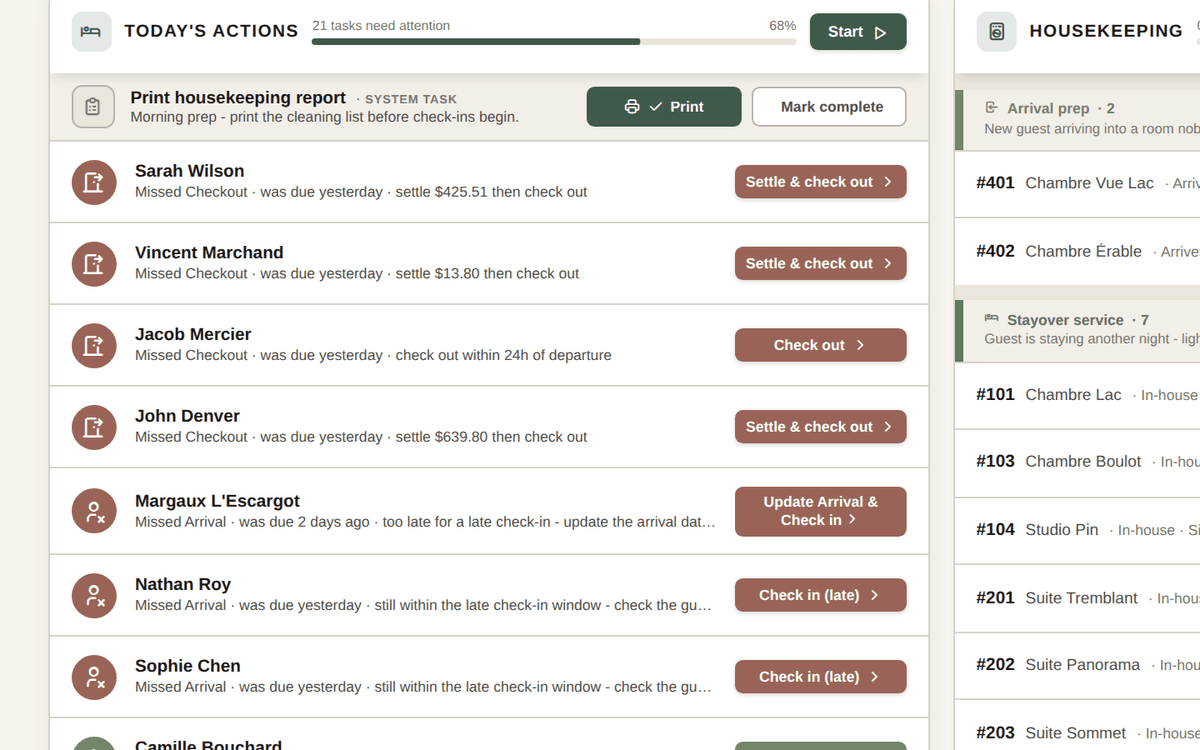
Lodging, activities, housekeeping and reporting, run from one screen. Today's work in order, and a Start button that walks you through it one guest at a time.
See it →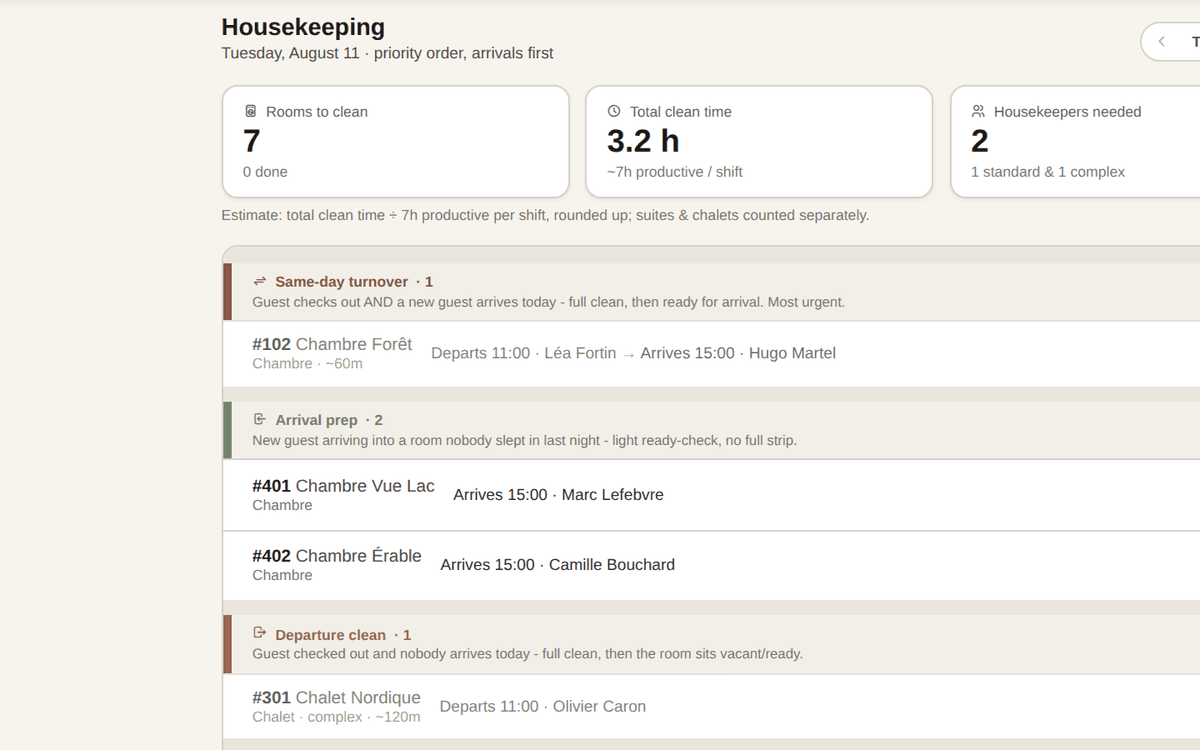
Housekeeping
Which rooms need cleaning, in order of priority, and how many housekeepers you need today and each day this week.
See it →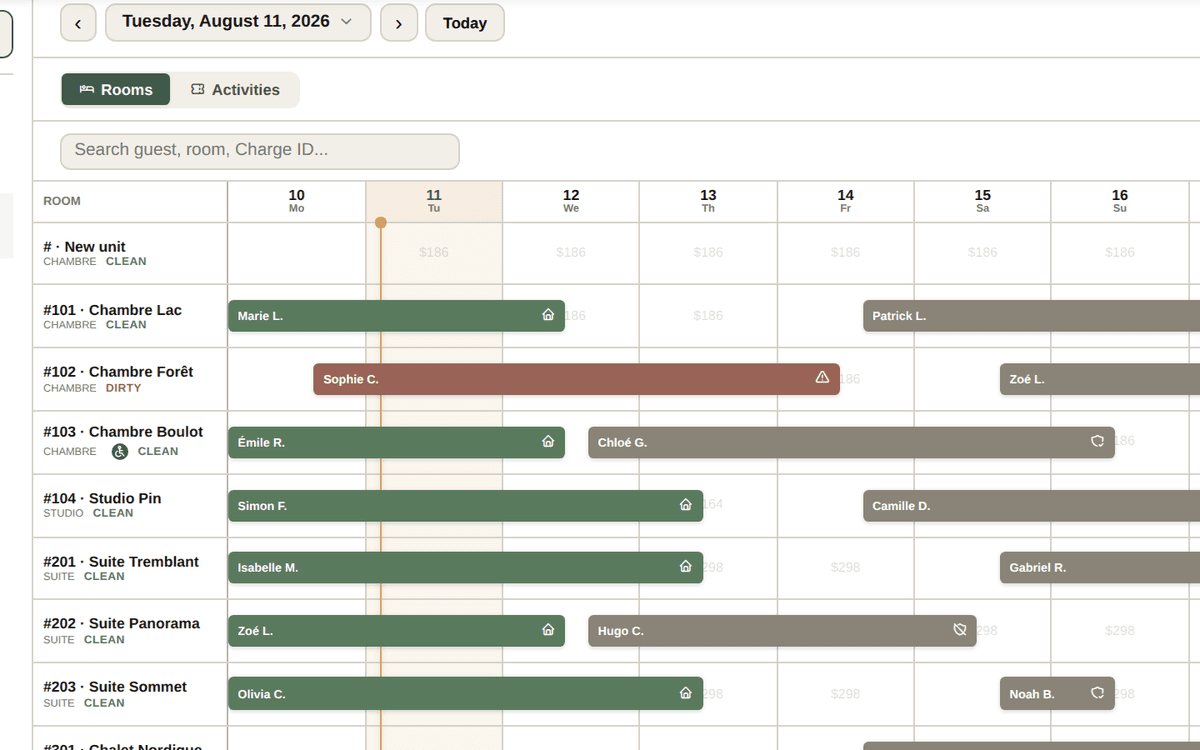
Rooms
All your lodging as a calendar or a list. Drag to book, drag to extend, and free up whole units when the week gets fragmented.
See it →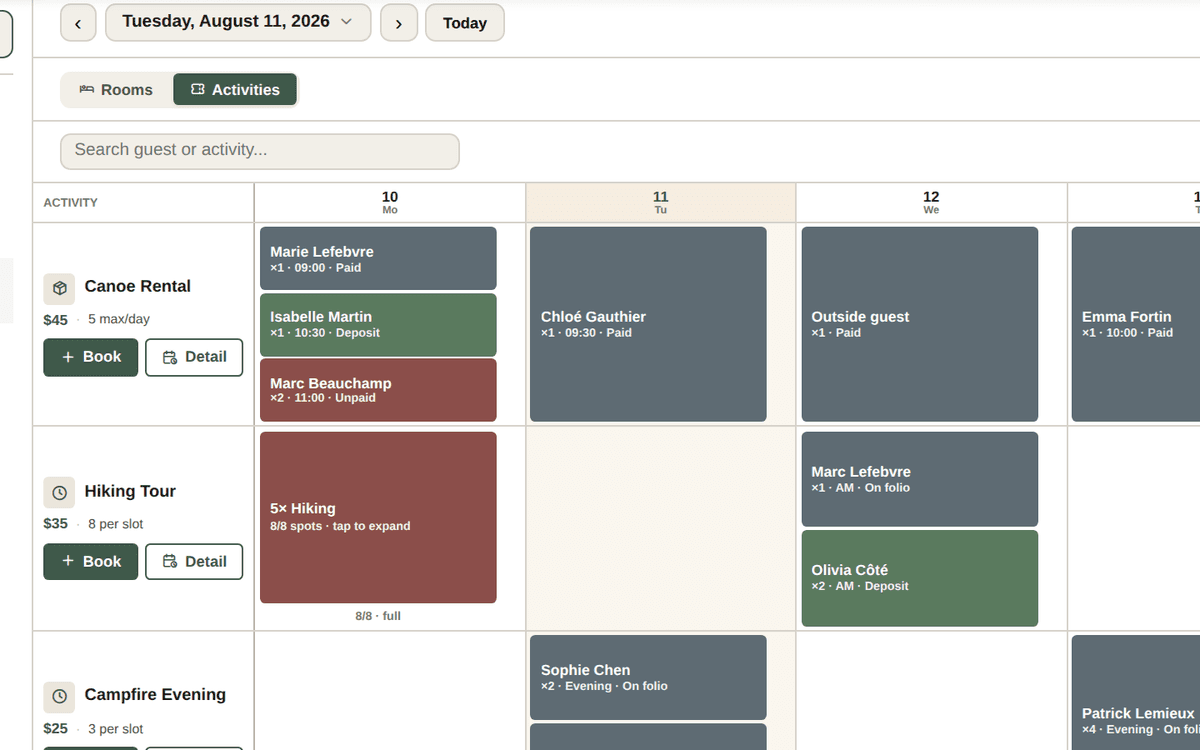
Activities
Rentals, guided sessions and hourly bookings, as a calendar, a list or a daily schedule, each with its capacity.
See it →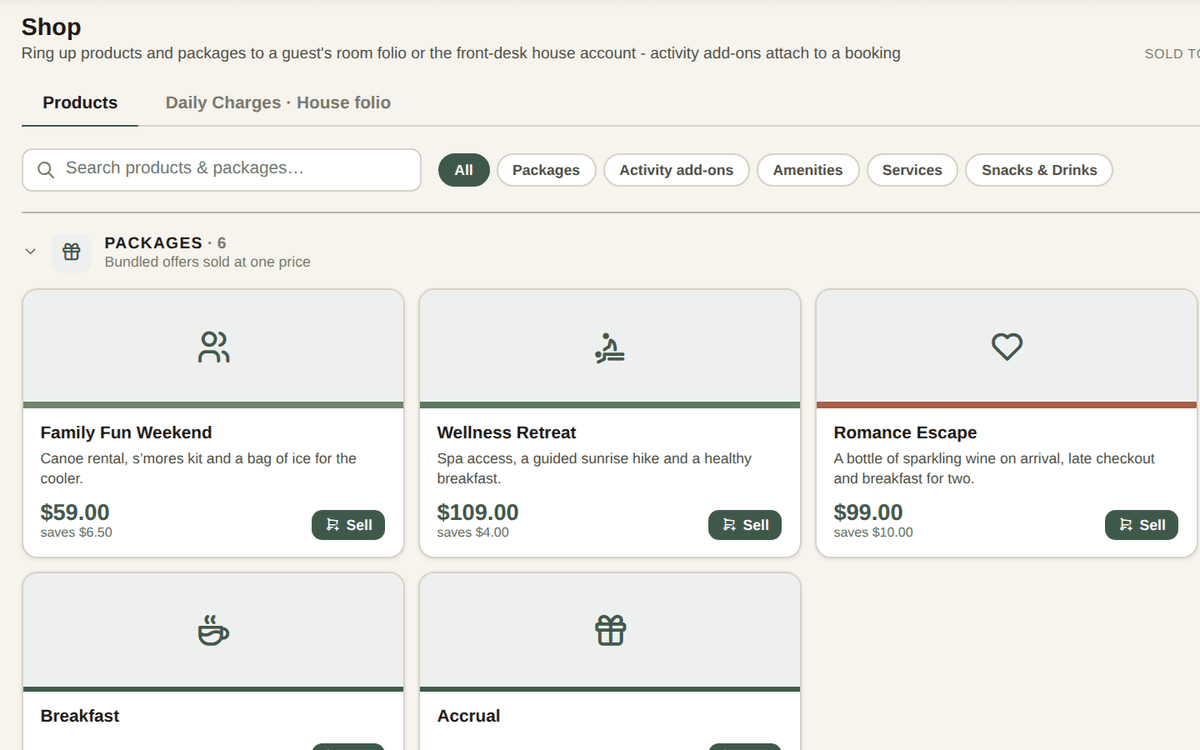
Shop
Products, add-ons and packages, sold to in-house guests on their room bill or to visitors on the day's desk folio.
See it →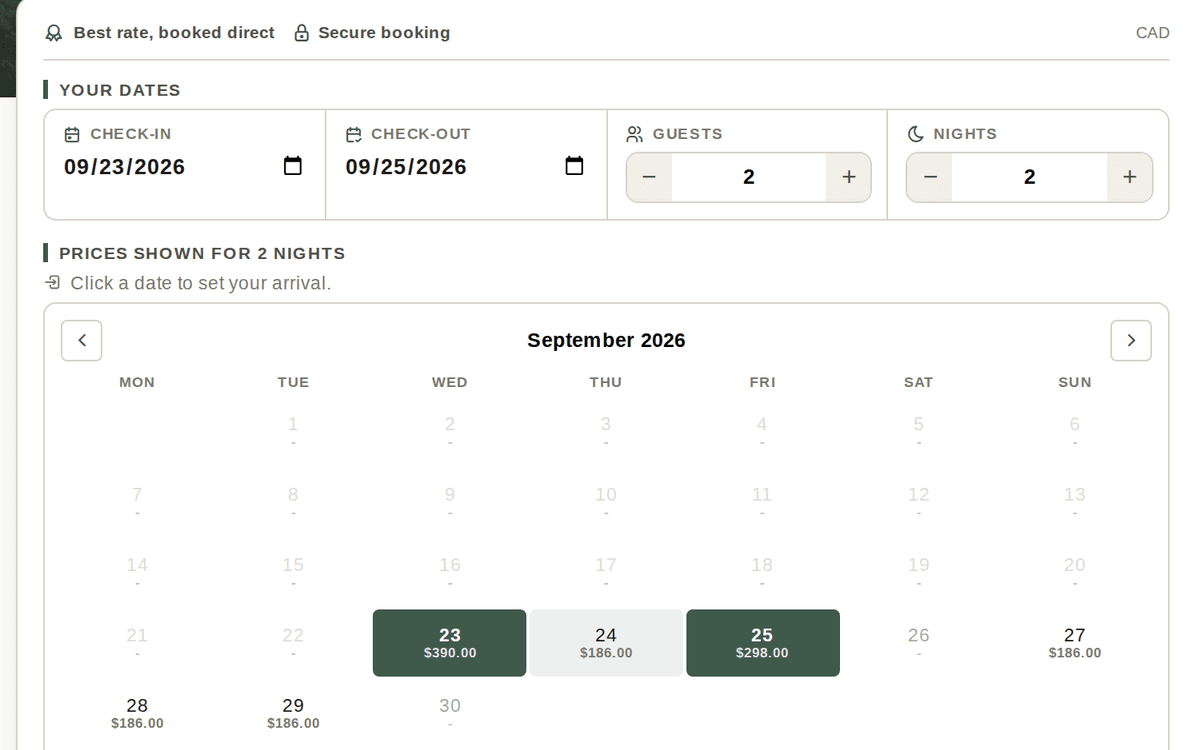
Booking Engine + Payments
Your own booking page at no commission, booking straight into the calendar the desk uses. Airbnb, VRBO and Booking.com calendars kept in step both ways, every hour. Every payment recorded against the right folio, Interac included, and payment links the guest pays on their own device.
See it →Questions
Asked and answered
Can I include breakfast in the room rate?
Three ways, and you choose per item: charge it as its own line, blend it into the nightly price so the guest sees one all-in rate, or comp it. Blended keeps the accounting correct, because the lodging tax is still computed on the lodging portion only.
How do I sell a package that is per person, per night?
That is one of the four pricing bases: per stay, per night, per person, per person-night. Breakfast for two over three nights bills six, correctly, with no arithmetic at the desk. You can also choose which day a package starts, so added on day two of a four-night stay it bills two mornings.
How does the kitchen know who eats when?
The guest service report: every guest on property that day, their services, that day's activities with times, and a printable sheet with a signature column.
Do I get a direct booking page?
Yes. Hosted, no login for the guest, mobile-friendly, showing your photos, description, amenities and policy. It prices through the same rate engine the desk uses and writes a real reservation. Commission-free.
Do you have a night audit?
No, and there is nothing here for one to do. A night audit exists in legacy systems because the books are only correct after a batch process rolls the day. In Cardinal every transaction posts as it happens and the ledger is always current. Instead of a nightly close there is an automatic sweep that resolves no-shows and overdue check-outs, and a completeness reconciliation that runs before you read any report.
How long does it take to get set up?
Enter your property address and the province, tax table and timezone configure themselves. Then add your room types and rates. A single-rate property is fully operational after the rooms section. Rate plans and bulk rate tools are optional and labelled as such.
What if I do not know what a field means?
Every field a first-timer cannot be expected to know carries a small (i), right beside the field, with a plain-language note: what a lodging tax applies to, what a minimum stay does to a rate, what a scheduling model is for an activity. The note is written for somebody who has never run a property, and it is the same voice in configuration, at the folio and in the manager's reports.
Can I import my existing data?
Yes, and it is in the price rather than a line on an onboarding order. Guests and reservations come across by CSV, and we do the first pass with you on a call using your real rooms and rates. The same door works outward: CSV exports and a full JSON backup of everything, self-serve, whenever you want them.
See it running
Watch a day run before you talk to anyone.
Six real screens from a working property, in the order the day happens. Open it now and go at your own pace.