

For motels and inns
The system an independent motel actually needs, and not much else
Crew accounts that bill correctly, weekly rates that follow your base, a direct booking page with no commission, and a ledger that produces your return at the end of the month.
The daily reality
Built for a desk with one or two people behind it
Crew and corporate accounts, aged
A city ledger with rolling receivables per company, aging at 0-30, 31-60, 61-90 and 90+, split between unbilled and invoiced. The stay accrues during the stay and becomes a receivable at check-out.
Purchase orders on the invoice
Capture a purchase order or authorization number on the booking and print it on the invoice, because that is what gets it paid.
Long-stay and weekly rates
Rate plans carry a daily, weekly or monthly cadence and a minimum stay, and they follow your base rate, so raising prices does not mean editing every plan.
Split the bill without splitting the booking
The company covers the room while the guest covers their own extras. One reservation, two settlements, one screen, and the desk is walked through them in order rather than left to work out which half is which.
Write the room description once for all twenty
A motel is mostly identical units. A description written for a room type lands on every room in it, or on the ones you pick, and it steps over any room you have already given its own wording. Twenty rooms are set up in the time one takes.
Getting off the OTAs
The direct booking math
A booking page with no commission
Hosted, no login for the guest, showing your photos and policy, priced through the same rate engine as the desk, writing a real reservation.
Commission modelled by who collects
A hotel-collect channel invoices you monthly. A merchant-model channel charges the guest, keeps its cut and remits net. Treating those the same either chases a guest for money they already paid or zeroes a folio they owe.
Same-day turnovers, guarded
Check-in into an occupied room is blocked and names who to check out first. A room not cleaned since the last guest raises a warning you can override.
No night audit
Every transaction posts as it happens, so there is nothing to roll at 3am. An automatic sweep resolves no-shows and overdue check-outs overnight.
Ask what the last three systems you used cost you in training, and how many of their features your staff have opened this season.
The product
Everything a small property runs on
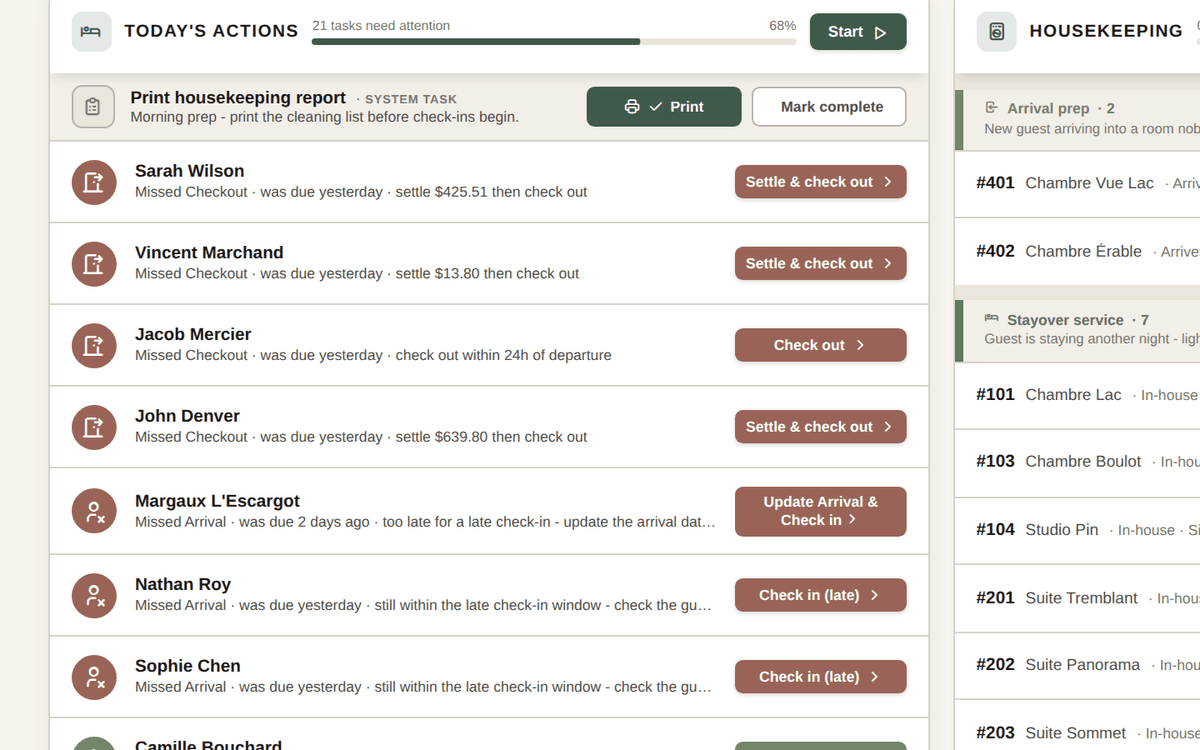
Control Deck
Lodging, activities, housekeeping and reporting, run from one screen. Today's work in order, and a Start button that walks you through it one guest at a time.
See it →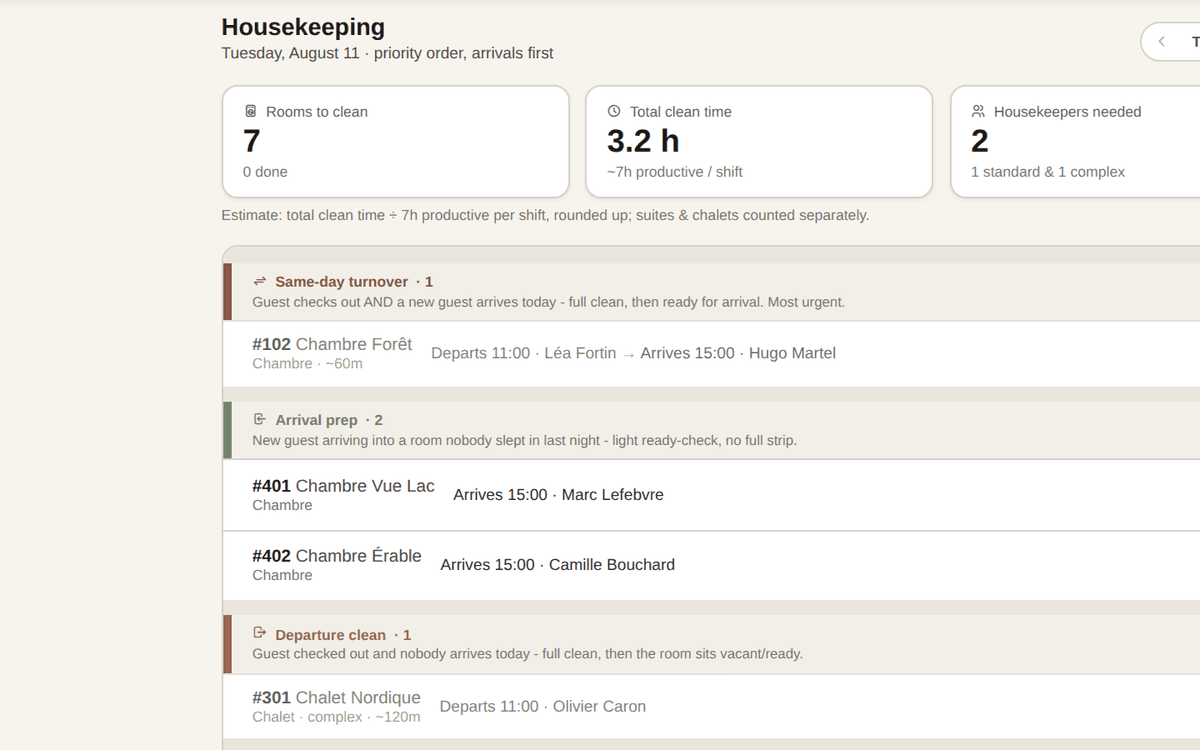
Housekeeping
Which rooms need cleaning, in order of priority, and how many housekeepers you need today and each day this week.
See it →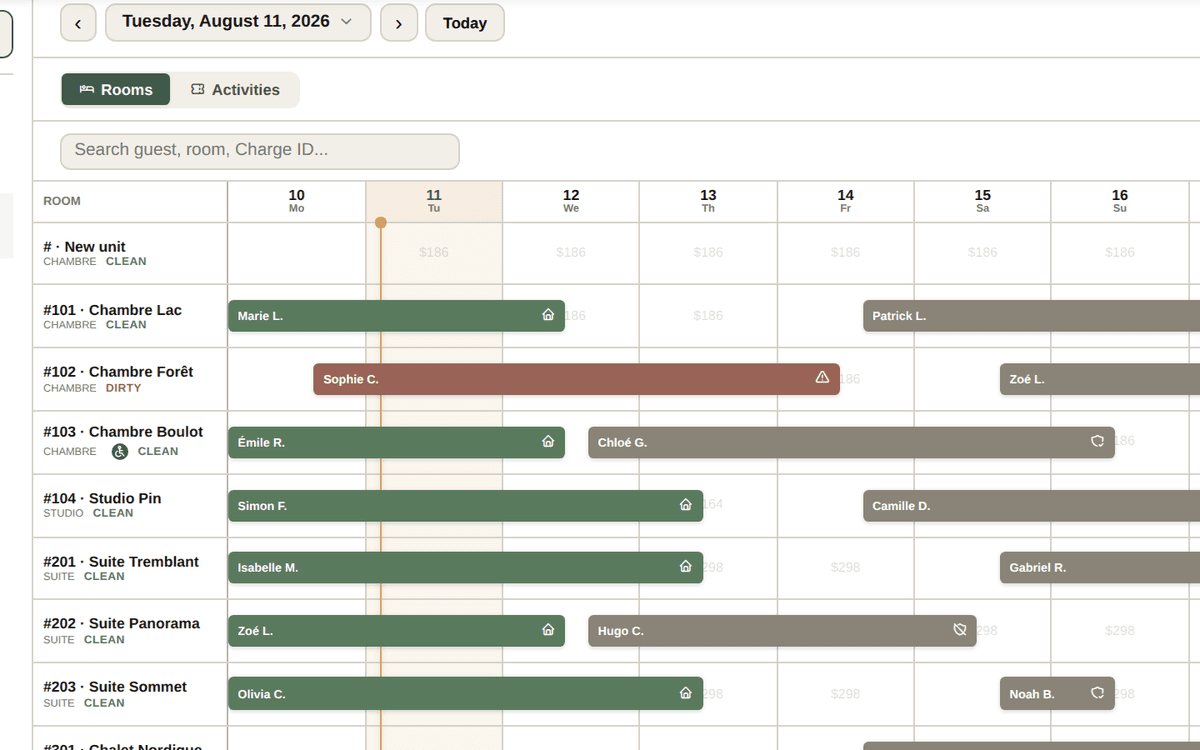
Rooms
All your lodging as a calendar or a list. Drag to book, drag to extend, and free up whole units when the week gets fragmented.
See it →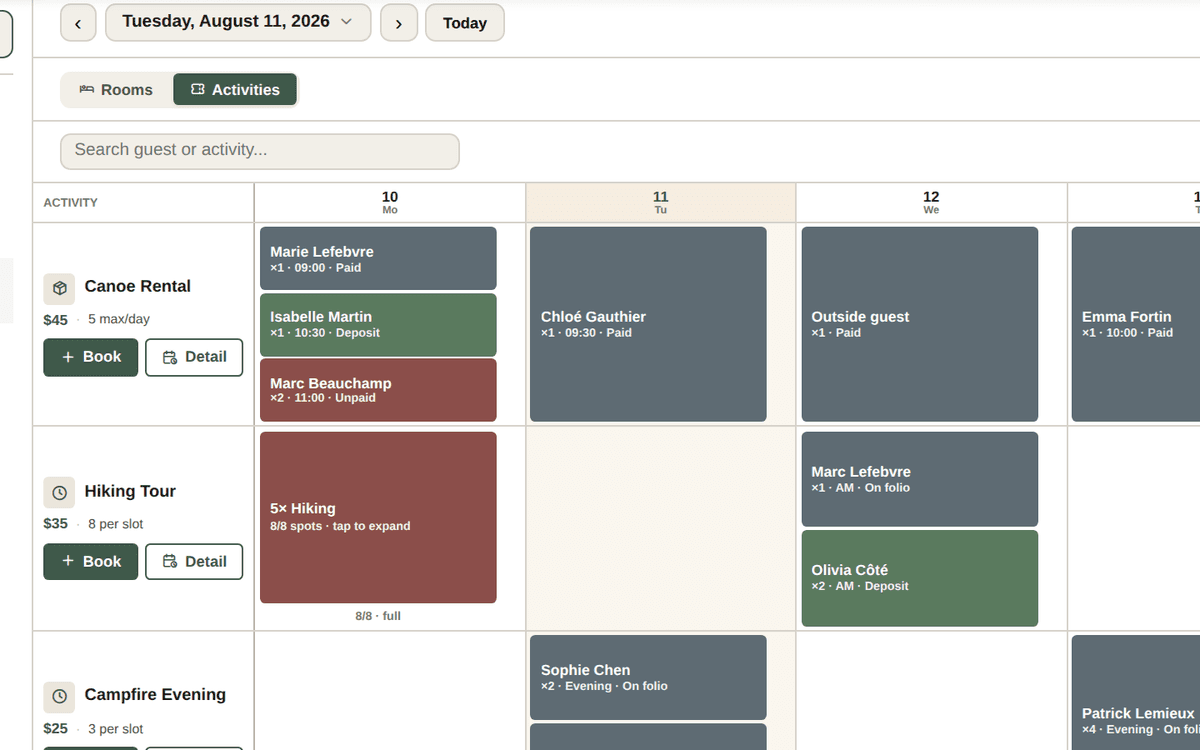
Activities
Rentals, guided sessions and hourly bookings, as a calendar, a list or a daily schedule, each with its capacity.
See it →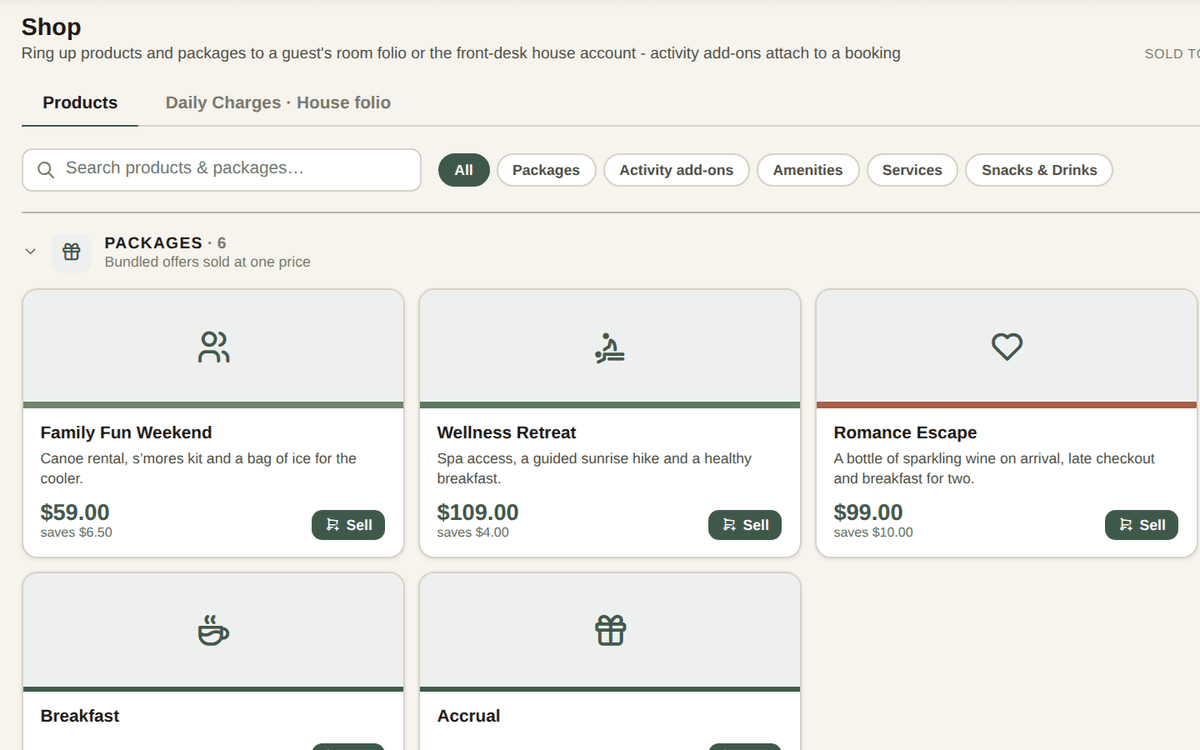
Shop
Products, add-ons and packages, sold to in-house guests on their room bill or to visitors on the day's desk folio.
See it →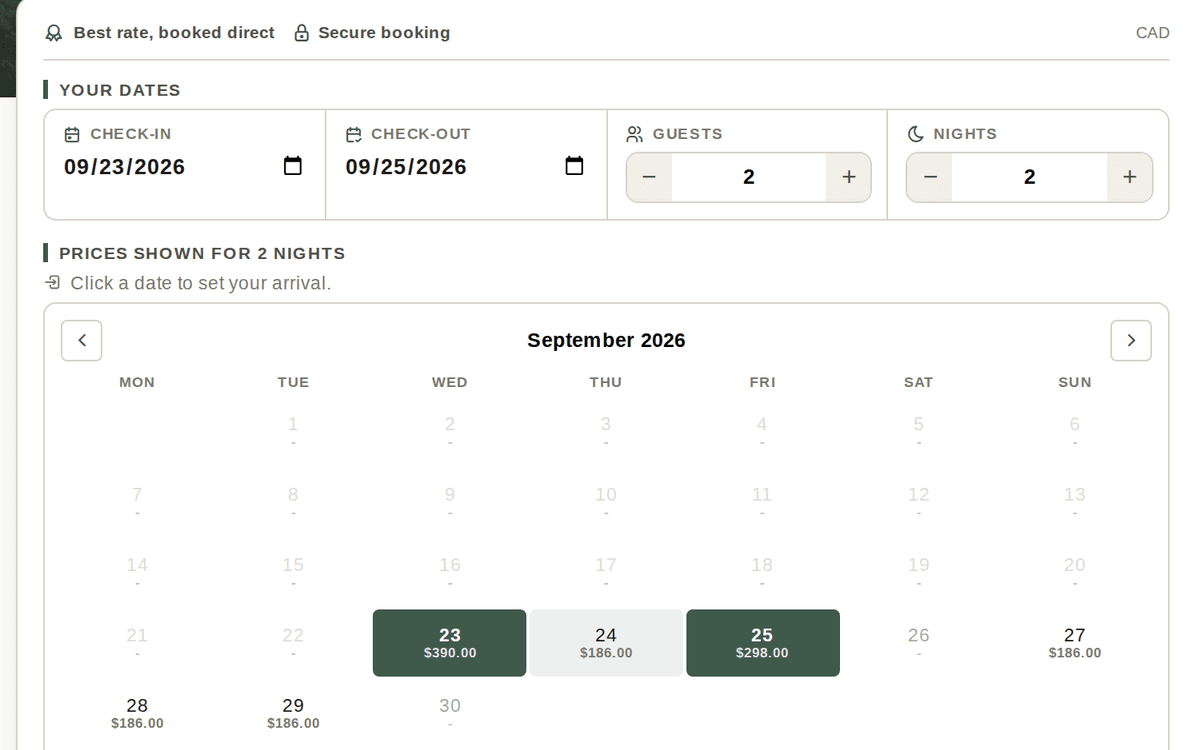
Booking Engine + Payments
Your own booking page at no commission, booking straight into the calendar the desk uses. Airbnb, VRBO and Booking.com calendars kept in step both ways, every hour. Every payment recorded against the right folio, Interac included, and payment links the guest pays on their own device.
See it →Questions
Asked and answered
Can I have different rates for different seasons and companies?
Yes. Date windows, seasons, minimum stay, daily, weekly or monthly cadence, restricted to a company account, or unlocked by a rate code.
Can the room go on the company account while the guest pays for their own extras?
Yes. Charges group automatically into lodging, activities and products, and other. Each group can settle on its own method. One reservation, two settlements, one screen.
Do you track OTA commission?
Yes, and it is modelled properly. Who collects the guest's money is a per-channel setting, because it changes everything: a hotel-collect channel invoices you commission monthly, while a merchant-model channel charges the guest, keeps its cut and remits net. Conflating those either chases a guest for money they already paid or zeroes a folio the guest genuinely owes.
Do you have a night audit?
No, and there is nothing here for one to do. A night audit exists in legacy systems because the books are only correct after a batch process rolls the day. In Cardinal every transaction posts as it happens and the ledger is always current. Instead of a nightly close there is an automatic sweep that resolves no-shows and overdue check-outs, and a completeness reconciliation that runs before you read any report.
Can I stop someone checking a guest into an occupied room?
It is already blocked. The system names the guest who has to be checked out first and links straight to their reservation.
Do I need a credit card terminal?
Either way works. Cardinal Payments runs cards through Stripe and posts them straight to the folio, and a hosted link lets the guest pay on their own device. If you already have a terminal, keep it: what you take on it, in cash, by cheque or by Interac debit is recorded on the same folio. Card details are never typed into Cardinal.
What if I do not know what a field means?
Every field a first-timer cannot be expected to know carries a small (i), right beside the field, with a plain-language note: what a lodging tax applies to, what a minimum stay does to a rate, what a scheduling model is for an activity. The note is written for somebody who has never run a property, and it is the same voice in configuration, at the folio and in the manager's reports.
Can I import my existing data?
Yes, and it is in the price rather than a line on an onboarding order. Guests and reservations come across by CSV, and we do the first pass with you on a call using your real rooms and rates. The same door works outward: CSV exports and a full JSON backup of everything, self-serve, whenever you want them.
See it running
Watch a day run before you talk to anyone.
Six real screens from a working property, in the order the day happens. Open it now and go at your own pace.