

For chalets and vacation rentals
The nightly rate is the easy part
A chalet business is a turnover business with a tax problem attached. Weekly cadence, cleaning that has to land between one departure and the next arrival, deposits held for months, and a platform that may have already collected the tax you are being asked to remit.
The differences that matter
What a rental business needs that a nightly hotel system does not
Rates with a weekly and monthly cadence
A rate plan carries a daily, weekly or monthly cadence plus a minimum stay and its own season windows. A seven night summer week and a two night shoulder booking price from the same base rate without a second system or a spreadsheet.
Raise your prices once
Rate plans follow your base rate rather than storing their own copy of it. Change the base and every plan derived from it moves, so a mid-season adjustment is one edit instead of thirty.
The turnover is the operation
Housekeeping priority is derived from the day's movements, so a same-day turnover outranks a stayover automatically. The forecast converts tomorrow's departures into cleaning time and the number of people needed to cover it.
A guard on the same-day arrival
Checking a guest into a unit that has not been cleaned since the last one raises a warning you can override deliberately. Checking into a unit that is still occupied is blocked outright, and it names who has to leave first.
Deposits are a liability, not revenue
Money collected for a stay that has not happened yet is reported as deferred revenue, split between fully unearned future stays and the pro-rata unearned portion of stays in progress. A booking taken in February for July does not inflate February.
Units are not room numbers
Accommodation types are unlimited and arbitrary. A three bedroom lakeside chalet, a studio above the garage and a bunkie sit on the same board with their own rates and their own cleaning time.
If you also run rooms, campsites or a lodge alongside the chalets, that is one property here rather than two systems. Divisions filter independently on the board while sharing one guest database, one ledger and one set of books.
The platform question
When a platform collects the money, the tax question changes
This is the part that costs rental operators real money, and almost no software models it.
Who remits depends on how the guest reached you
A direct booking, a traditional agency booking and a digital platform booking are three different tax situations in Quebec, not one. The remittance report splits accommodation tax by who actually remits it rather than assuming it is always you.
Commission modelled by who collects
A channel that invoices you monthly and a channel that charges the guest, keeps its cut and remits you the net are not the same event. Treating them the same either chases a guest for money they already paid or zeroes a folio they still owe.
Lodging tax on accommodation only
The cleaning fee, the firewood and the kayak rental are not overnight stays. Lodging tax is its own component on a posting and is only ever populated from a lodging charge, so it cannot leak onto the rest of the bill.
A booking page with no commission
Hosted, no login for the guest, showing your photos and your policy, priced through the same rate engine as the desk and writing a real reservation. Every stay that moves onto it keeps its full margin.
The difference between a good year and a flat one is often the share of nights that did not pay commission.
The product
Everything a small property runs on
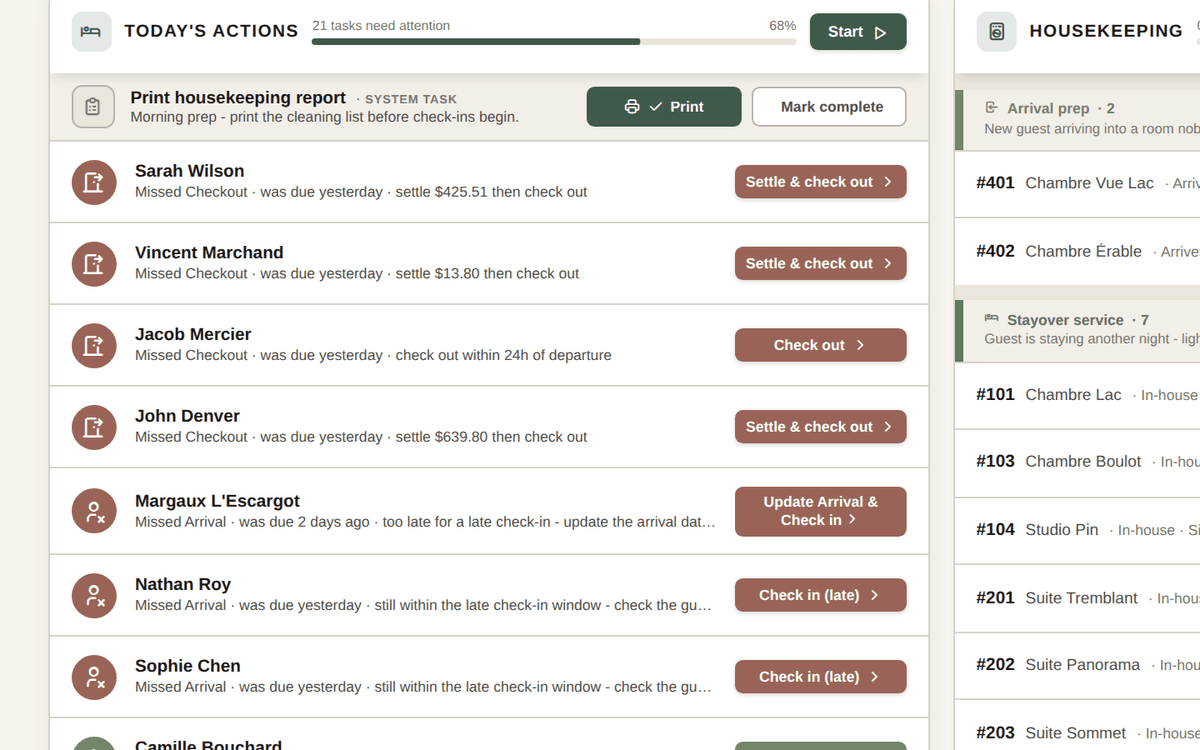
Control Deck
Lodging, activities, housekeeping and reporting, run from one screen. Today's work in order, and a Start button that walks you through it one guest at a time.
See it →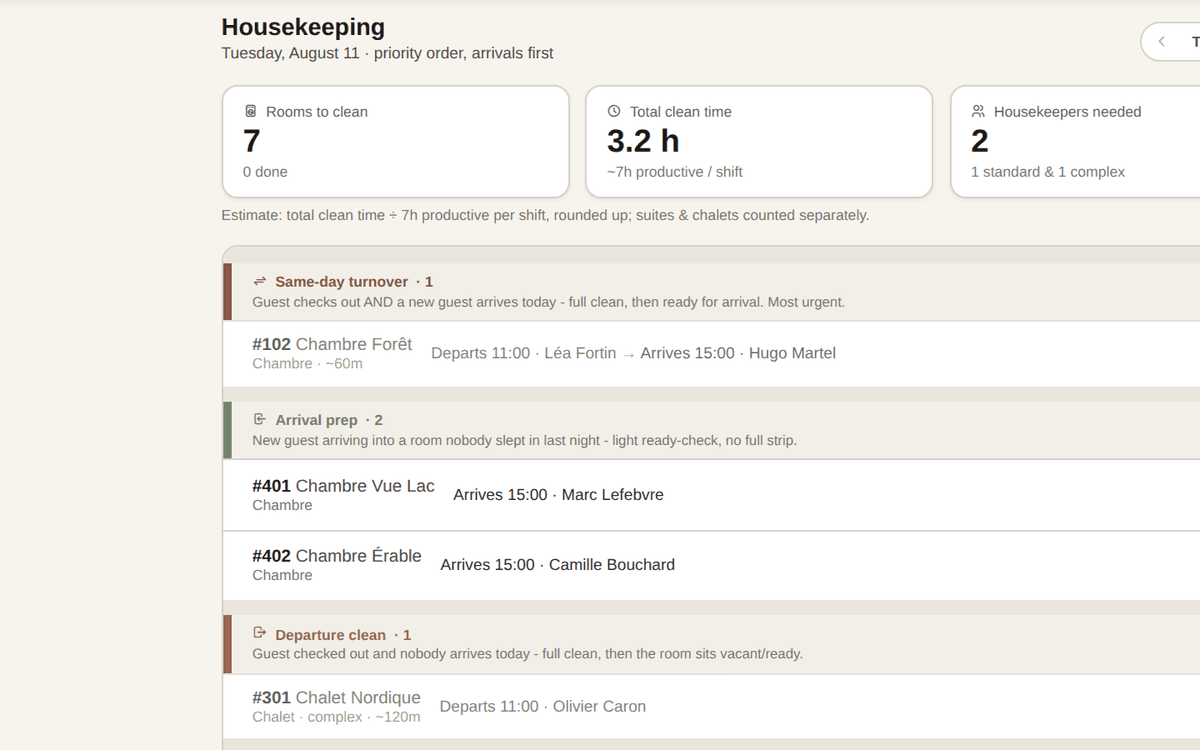
Housekeeping
Which rooms need cleaning, in order of priority, and how many housekeepers you need today and each day this week.
See it →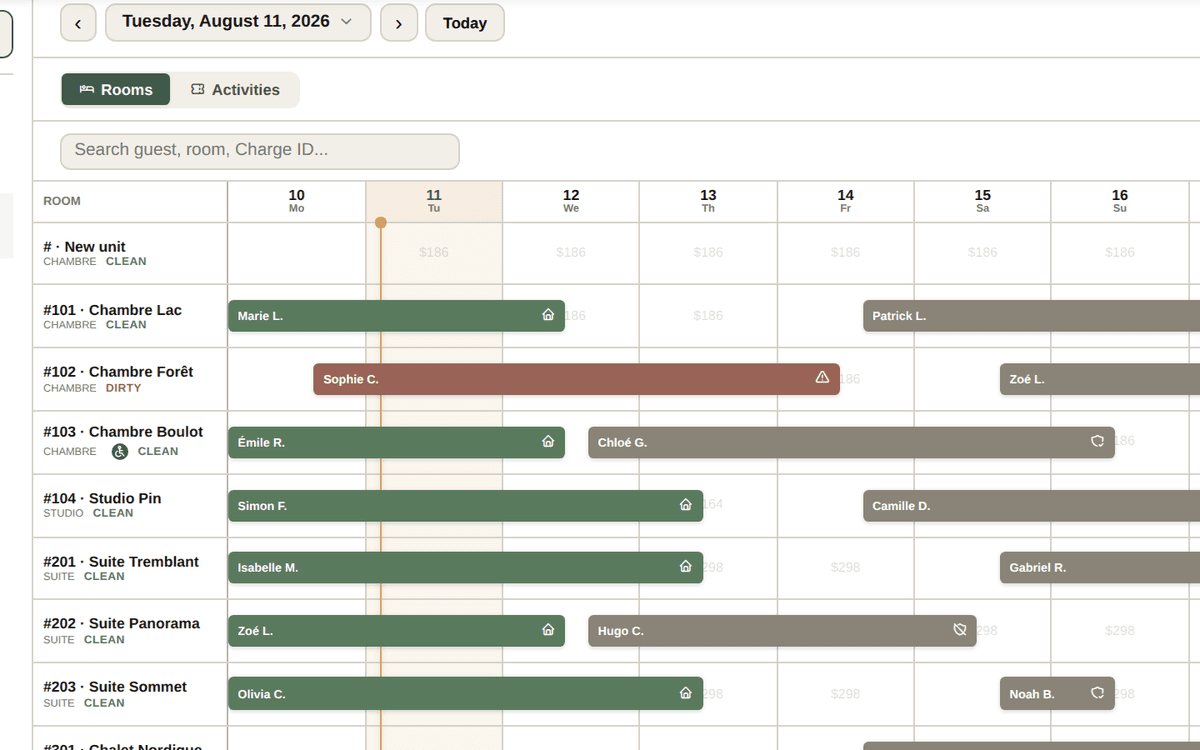
Rooms
All your lodging as a calendar or a list. Drag to book, drag to extend, and free up whole units when the week gets fragmented.
See it →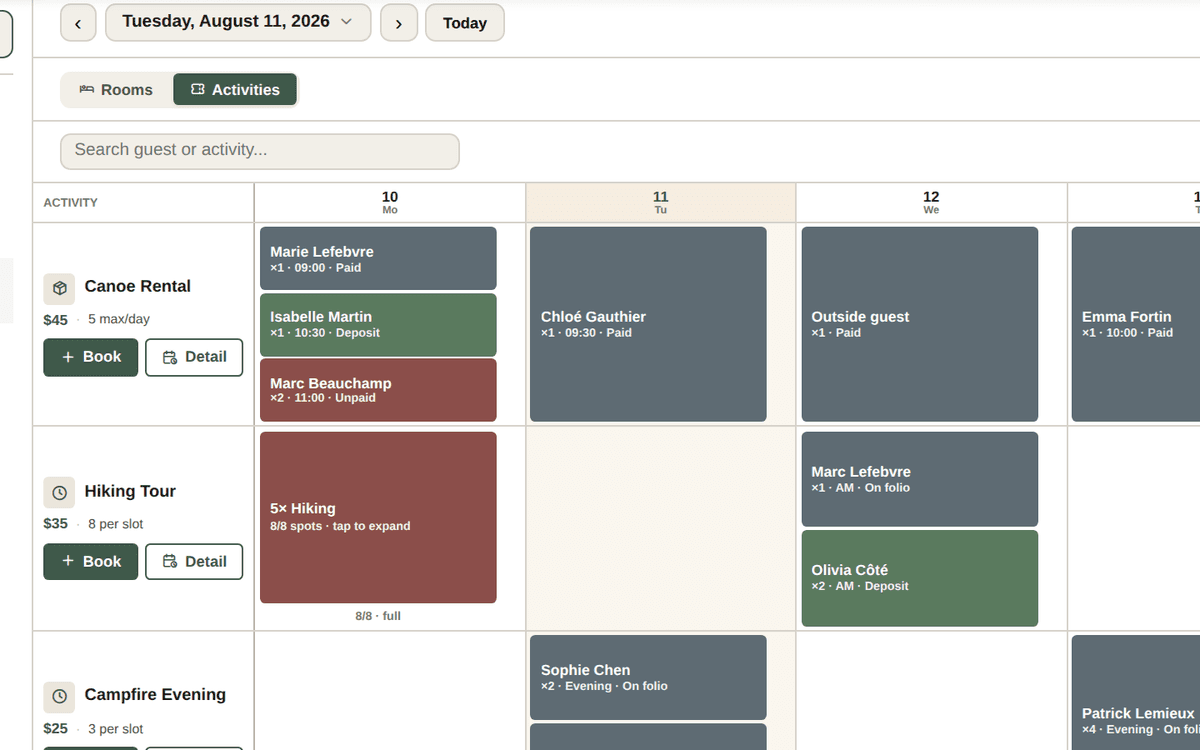
Activities
Rentals, guided sessions and hourly bookings, as a calendar, a list or a daily schedule, each with its capacity.
See it →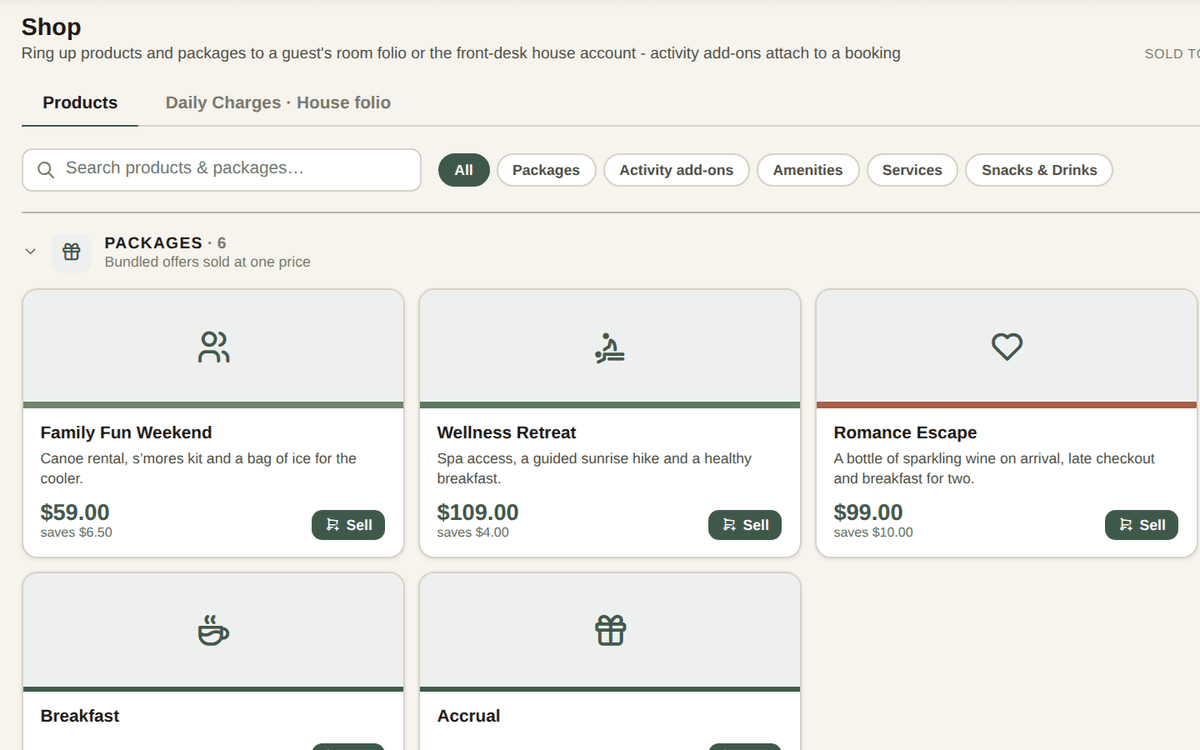
Shop
Products, add-ons and packages, sold to in-house guests on their room bill or to visitors on the day's desk folio.
See it →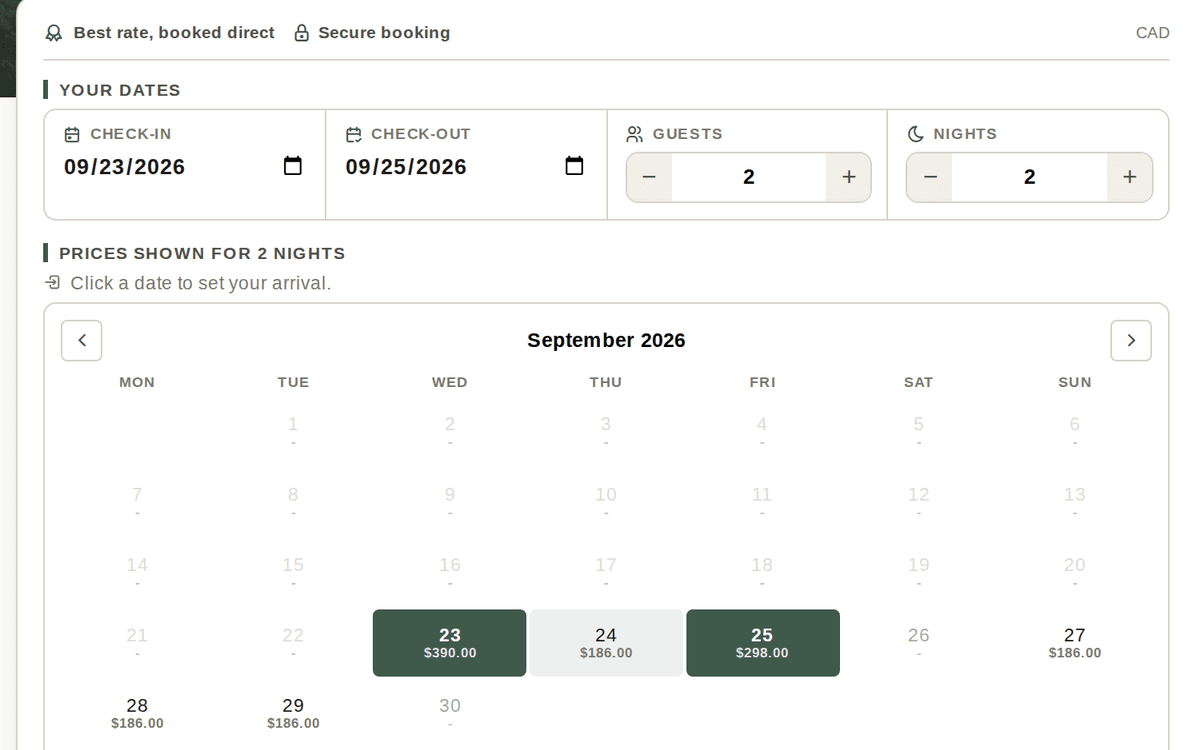
Booking Engine + Payments
Your own booking page at no commission, booking straight into the calendar the desk uses. Airbnb, VRBO and Booking.com calendars kept in step both ways, every hour. Every payment recorded against the right folio, Interac included, and payment links the guest pays on their own device.
See it →Questions
Asked and answered
What if I only rent one chalet?
It works, and the optional sections stay collapsed. The cost of a small property using Cardinal is not paying for complexity it does not touch.
I run a lodge with cabins and campsites. Two systems?
No. Divisions let one property hold a hotel wing and a campground side by side, filtered independently on the board but sharing one guest database, one ledger and one set of books.
Can I have different rates for different seasons and companies?
Yes. Date windows, seasons, minimum stay, daily, weekly or monthly cadence, restricted to a company account, or unlocked by a rate code.
Do I get a direct booking page?
Yes. Hosted, no login for the guest, mobile-friendly, showing your photos, description, amenities and policy. It prices through the same rate engine the desk uses and writes a real reservation. Commission-free.
Do you track OTA commission?
Yes, and it is modelled properly. Who collects the guest's money is a per-channel setting, because it changes everything: a hotel-collect channel invoices you commission monthly, while a merchant-model channel charges the guest, keeps its cut and remits net. Conflating those either chases a guest for money they already paid or zeroes a folio the guest genuinely owes.
How does housekeeping work?
Rooms are prioritized by what is actually happening: turnovers, then arrivals, then departures, then stayovers, then vacants. Staffing is forecast from cleaning time and productive hours per shift, with a seven-day outlook, and there is a printable daily report.
What if I do not know what a field means?
Every field a first-timer cannot be expected to know carries a small (i), right beside the field, with a plain-language note: what a lodging tax applies to, what a minimum stay does to a rate, what a scheduling model is for an activity. The note is written for somebody who has never run a property, and it is the same voice in configuration, at the folio and in the manager's reports.
Can I import my existing data?
Yes, and it is in the price rather than a line on an onboarding order. Guests and reservations come across by CSV, and we do the first pass with you on a call using your real rooms and rates. The same door works outward: CSV exports and a full JSON backup of everything, self-serve, whenever you want them.
See it running
Watch a day run before you talk to anyone.
Six real screens from a working property, in the order the day happens. Open it now and go at your own pace.